The hydraulic rotary drill rig sets up with a 10-foot mast clearance, working through interbedded sands and silts typical of the American River floodplain. In Sacramento, anchor installation often encounters lenses of gravel and cobble at depths between 25 and 45 feet—remnants of ancient river channels that crisscross the city. The drill advances a hollow-stem auger or duplex casing to prevent hole collapse in loose, saturated ground. Once design depth is reached, high-strength Dywidag threadbar or strand tendon is inserted. Neat cement grout is tremie-placed from the bottom up under controlled pressure. The crew monitors grout take volume continuously. Excessive loss indicates a void or fractured zone. In Sacramento's downtown grid, where 5- to 7-story structures abut the right-of-way, a failed anchor bond zone can delay a project by weeks. That is why every anchor zone must be pressure-tested and logged before lock-off. For projects in the alkali flats south of Broadway, where sulfates attack ordinary cement, we specify Type V sulfate-resistant grout and coordinate the in-situ permeability testing to confirm the soil's chemical aggressiveness before anchor design finalization.
Anchor bond capacity in Sacramento's interbedded alluvium is not a catalog value—it is verified by proof testing every anchor on the job.
Scope of work in Sacramento
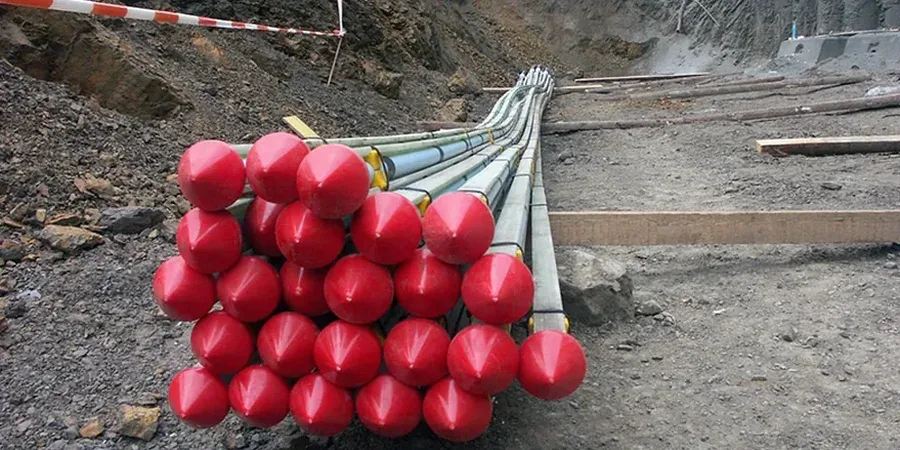
Risks and considerations in Sacramento
Sacramento's urban core expanded rapidly after the Gold Rush, with much of the original city built on hydraulic mining debris and uncompacted fill. The Railyards development—240 acres of former Union Pacific yard—contains a century of cinder ballast, creosote-treated timbers, and buried rail infrastructure. Anchor installation across this kind of fill is unpredictable. Drilling can hit a buried timber at 12 feet, then void at 18. If the grout column is not continuous through the bond zone, the anchor cannot develop design capacity. Proof testing reveals the failure. A sacrificial test anchor program on the front end saves money. The other Sacramento-specific risk is seismic. The city sits between the Coast Range faults to the west and the Sierra Nevada frontal fault zone to the east. The ASCE 7-22 design spectra for Site Class D and E soils in zip codes 95814 and 95811 require anchors to sustain cyclic load without unbonding. Our design approach applies the FHWA GEC No. 4 methodology for seismic anchor design, including a 15% dynamic load allowance. For sites near the Sacramento River levee system, we also evaluate the slope stability of the excavation face under rapid drawdown conditions.
Our services
Anchor design in Sacramento requires integration across three phases: subsurface investigation, detailed design, and field verification. The following service packages address projects from single-tier shoring to multi-level basement excavation in urban infill sites.
Tieback anchor design and load testing
Full design package for active prestressed tiebacks including bond zone calculations in stratified soil, corrosion protection specification per PTI Class I, and on-site proof testing at 133% of lock-off load. We supervise the first three anchors to establish installation criteria, then perform spot-check performance tests on 5% of production anchors. Final submittal includes signed anchor logs, grout take records, and load-extension curves for every anchor.
Passive anchor and soil nail wall design
Design of gravity-stabilized blocks and soil nail arrays for permanent retaining structures. Passive systems are well suited to Sacramento's suburban commercial developments where long-term access is not constrained. We calculate the required embedment depth, nail spacing, and facing reinforcement using limit equilibrium methods and verify global stability with Spencer's method. Shotcrete facing design follows Caltrans Standard Specifications Section 61.
Quick answers
What is the difference between an active and a passive anchor?
An active anchor is prestressed to a design lock-off load immediately after installation. It actively applies a compressive force to the retained soil mass. A passive anchor develops resistance only when the soil mass begins to move and the tendon elongates. Active anchors are used for stiff shoring walls where deflection must be controlled—common in Sacramento's downtown projects where adjacent building foundations are within 10 feet of the excavation. Passive anchors, including soil nails, allow some deformation and are suited to cut slopes and less constrained sites.
How deep can anchors be installed in Sacramento's soil?
Anchor lengths in Sacramento typically range from 35 to 70 feet total, with bond zones positioned 25 to 60 feet below ground surface. The limiting factor is not the drill rig capability—modern Klemm and Casagrande rigs can reach 100+ feet—but the depth to competent bearing strata. In the central city, the Pleistocene-age Mehrten Formation provides excellent bond at 50 to 65 feet. Near the Sacramento River, anchors may need to go deeper to pass through loose channel deposits and reach dense river terrace gravel.
What testing is required for ground anchors?
Per PTI DC35.1 and IBC 2024, every prestressed anchor must undergo a proof test to 133% of the design lock-off load. The anchor is loaded in increments while displacement is recorded. A creep test follows: the load is held at the proof level for 10 minutes, and movement must not exceed 1 millimeter. Performance tests on sacrificial anchors load to failure or 167% of design load. In Sacramento, we also recommend extended creep tests for anchors in high-plasticity clay zones, where long-term relaxation can reduce preload over time.
How much does anchor design and testing cost in Sacramento?
The design and testing package for a typical Sacramento shoring project ranges from US$950 to US$3,960, depending on the number of anchors, the complexity of the subsurface profile, and the number of test programs required. A single-family lot retaining wall with four to six passive anchors falls at the lower end. A multi-level commercial excavation with 40+ active tiebacks, corrosion protection, and full proof testing on every anchor falls at the upper end. We provide a fixed-fee proposal after reviewing the geotechnical report and structural plans.
Can anchors be installed adjacent to existing underground utilities?
Yes, but it requires careful coordination. Sacramento's older districts—Midtown, East Sacramento, Land Park—have congested utility corridors with PG&E gas lines, city water mains, and legacy clay pipe sewers. Before any anchor drilling, we require a subsurface utility engineering (SUE) survey at Quality Level A or B. Anchor inclination can be adjusted to pass beneath utility lines. In tight easements, we use a smaller-diameter drill mast and stage the anchor installation sequence to avoid conflict zones. A potholing crew confirms utility locations at each anchor position before drilling begins.