Building in Midtown near Sutter’s Fort presents a different challenge than expanding into Natomas. Midtown sits on older, compacted alluvial fans. Natomas was flood basin until the early 1900s. The soil mechanics study we run in each area yields completely different parameters. Our Sacramento team has drilled through both. We know the transition zones. After 6,000+ boreholes across the metro, we can tell you what your geotech report needs before the drill rig arrives. That local knowledge combined with ASTM-standard SPT drilling cuts days from the investigation phase.
Sacramento's soil profile changes in 500 feet. One lot has stiff clay at 10 feet. The next has loose sand to 40 feet. The report must reflect that.
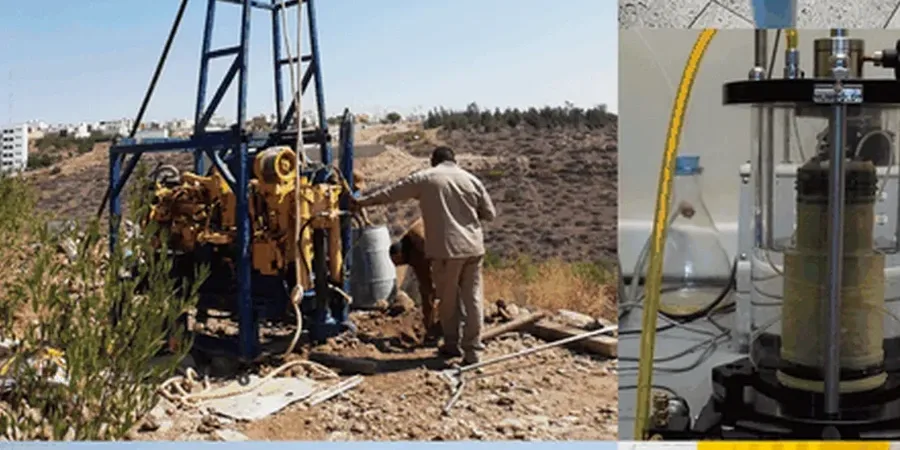
Scope of work in Sacramento
Risks and considerations in Sacramento
In Sacramento, we often see foundation plans drawn before a soil mechanics study is ordered. The architect assumes 2,000 psf bearing. Then our report comes back with 1,200 psf because of undocumented fill in the Arden-Arcade area. The redesign cost is real. Another risk we catch regularly: expansive soils in the eastern county. The Mehrten Formation-derived clays near Folsom can swell 4% by volume. A pavement section without a moisture barrier heaves within two wet seasons. Our study quantifies the expansion index so the civil engineer can specify the right treatment from the start.
Our services
Each soil mechanics study we deliver includes field investigation, lab testing, and engineering analysis. These three components are bundled into every contract.
Field Drilling and Sampling
Truck-mounted CME-55 rig. Hollow-stem auger to 100 feet. SPT every 5 feet standard. Shelby tubes in clay layers. Jar samples in sand. We log per ASTM D2488 in the field.
Laboratory Testing Suite
Moisture content, density, Atterberg limits, sieve analysis, hydrometer, unconfined compression, direct shear, consolidation. All tests run in our Sacramento facility under the same project manager.
Foundation Recommendations Report
Bearing capacity, settlement estimates, lateral earth pressures, slab-on-grade modulus, corrosion potential. Sealed by a California-licensed geotechnical engineer. Delivered as PDF and .dwg.
Quick answers
How much does a soil mechanics study cost in Sacramento?
For a standard single-family lot, the range is US$2.830 to US$3.800. For a commercial building under 20,000 sq ft with two boreholes, expect US$4.200 to US$5.320. Projects requiring deeper drilling, consolidation testing, or liquefaction analysis run higher. We provide a fixed-price proposal after reviewing the site address and structural loads.
How deep do you drill in the Sacramento area?
For a two-story structure on spread footings, we drill 30 to 40 feet. For deep foundations, 60 to 80 feet. The Sacramento County Planning Department requires depth to 1.5 times the foundation width below the bearing elevation, plus enough to characterize compressible layers. We stop at a competent stratum with N-values above 30 blows per foot.
How long until we get the final stamped report?
Seven business days from the last day of drilling. Lab tests run concurrently with field work. The geotech engineer drafts the report on day 5. Internal peer review and stamping take two more days. Rush delivery in 4 days is available for an expedited fee.