Sacramento's subsurface is dominated by Holocene-age alluvial deposits from the Sacramento and American Rivers, creating a complex stratigraphy of interbedded silts, sands, and clays that shifts dramatically within a single city block. The depth to groundwater in much of the metro area sits between 10 and 25 feet below grade, a condition that complicates excavations and requires careful shoring assessment before any test pit goes deeper than four feet. When foundation loads must be verified or utility alignments confirmed through direct observation, an exploratory test pit provides data that borings alone often miss. We log each pit per ASTM D2487, mapping stratigraphic contacts, moisture conditions, and fill boundaries with precision that supports both shallow foundation design and seismic site classification under ASCE 7. For projects where soil strength parameters need quantification beyond visual classification, we often pair the excavation with an in-situ permeability test to determine infiltration rates in stormwater basins.
A four-foot-deep test pit in Sacramento's alluvium can reveal more about fill history and groundwater behavior than twenty feet of SPT samples.
Scope of work in Sacramento
Demonstration video
Risks and considerations in Sacramento
In Sacramento, we frequently encounter test pits where the upper three feet look like clean brown clay but the fourth foot reveals saturated loose sand that starts caving within minutes of exposure. This condition, common in the city's older neighborhoods near the American River Parkway, creates a real collapse hazard for unprotected excavations and can go completely undetected by drill rigs that advance casing through the unstable zone. OSHA requires protective systems for any excavation five feet or deeper, and in Sacramento's Type C soils, that depth threshold effectively drops to four feet when water is present. Beyond the immediate safety concern, an improperly backfilled test pit creates a future settlement zone that can crack slabs and sidewalks months after the contractor has left the site. Our team documents every lift of backfill with photographic records and compaction verification, ensuring the ground surface returns to a condition equal to or better than pre-excavation.
Our services
Our Sacramento exploratory test pit program covers the full lifecycle of the investigation, from utility clearance through final backfill documentation. Each service is executed by an experienced operator and logged by a geotechnical engineer who understands Central Valley stratigraphy.
Utility Clearance and Site Preparation
We coordinate with USA North 811 for underground service locating at least two business days before excavation, then physically verify clearance depths with hand tools prior to mechanical digging. In Sacramento's older districts, we add private utility locating for abandoned gas lines and inactive sewer laterals that public marking services do not capture.
Geotechnical Logging and Stratigraphic Profiling
Each pit wall is scraped clean and logged by a field engineer following ASTM D2487, with particular attention to fill-native contacts, mottling patterns in the Mehrten Formation remnants, and seepage zones. The log includes Munsell color notation, consistency and density descriptors, and depth to groundwater if encountered.
Sampling and Laboratory Coordination
Bulk samples are collected from each distinct stratum and transported under chain of custody to our materials lab for index testing. When intact soil fabric must be preserved for shear strength evaluation, we extract block samples from the pit floor or wall and coordinate with the triaxial shear test program to define drained and undrained parameters.
Quick answers
What is the typical cost of an exploratory test pit in Sacramento?
Test pit programs in the Sacramento area generally range from US$480 to US$900 per pit, depending on depth, access constraints, and whether shoring is required. Pits deeper than five feet that need hydraulic shoring or trench boxes fall toward the upper end of that range. The total cost also reflects utility locating fees, traffic control if the pit is in the public right-of-way, and the engineer's time for logging and report preparation.
How deep can you excavate a test pit in Sacramento's soils?
Practical depth depends on soil type and groundwater conditions. In the stiff Pleistocene alluvium found in the eastern parts of the city, we can typically reach 10 to 14 feet with benched or shored walls. In the looser Holocene sands and silts near the Sacramento River, groundwater seepage often limits depth to 6 to 8 feet before caving becomes unmanageable. Every pit over 5 feet deep requires a protective system per OSHA Subpart P.
What information does a test pit provide that a boring cannot?
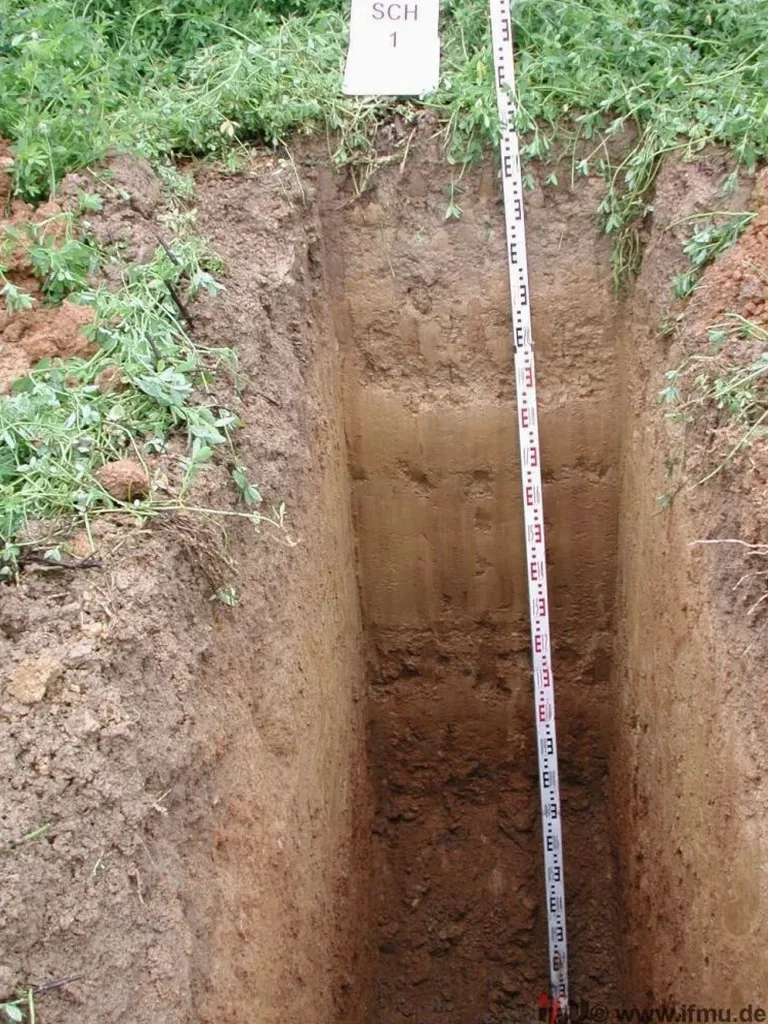
A test pit exposes a continuous vertical face, allowing direct observation of soil fabric, stratification contacts, fill boundaries, and seepage patterns that are often disturbed or missed in driven samples. We can photograph the exposed profile, collect undisturbed block samples, and visually identify thin organic seams, buried debris, or abandoned utility lines. Borings provide a linear record; a test pit provides a two-dimensional window into the subsurface.
Do I need a permit to excavate test pits in Sacramento?
Permit requirements depend on location. Test pits on private property for geotechnical investigation purposes typically do not require a city permit, though we must comply with OSHA safety regulations and obtain USA North 811 clearance. Excavations within the public right-of-way, including sidewalks and streets, require an encroachment permit from the City of Sacramento Public Works Department, which we coordinate as part of the project planning phase.
How do you backfill a test pit to prevent future settlement?
We backfill in controlled lifts not exceeding 8 inches of loose thickness, with each lift compacted using a vibratory plate or jumping-jack compactor to match the density of the surrounding native soil. In saturated zones, we use select granular backfill to prevent water trapping. Every lift is documented photographically, and the final surface is graded to blend with the surrounding grade. For pits under future slabs or pavement, we often restore full compaction with density testing per ASTM D1556.